Gloway Client Case Study / GloSource™ · Cost benchmarking
How Equator Harvest LLC Identified an 8.7% Sourcing Cost Reduction with Gloway
A U.S. food importer shared invoices from previous Cameroon shipments. Gloway compared historical sourcing prices with manufacturer benchmarks and identified a potential opportunity to reduce purchase costs.
The challenge
Equator Harvest LLC had previously sourced food products from Cameroon. Its historical invoices included product prices and exporter service fees, but the importer needed a clearer view of whether these costs were competitive. Small differences in unit cost can add up across a multi-product shipment.
Our approach
Gloway reviewed the historical invoices and benchmarked sourcing prices against its manufacturer database. The exercise identified potential lower-cost supply options. Before a purchasing decision, quoted prices must be checked on a like-for-like basis for product specifications, packaging, quantities, service fees, quality, compliance and delivery terms.
Business outcomes
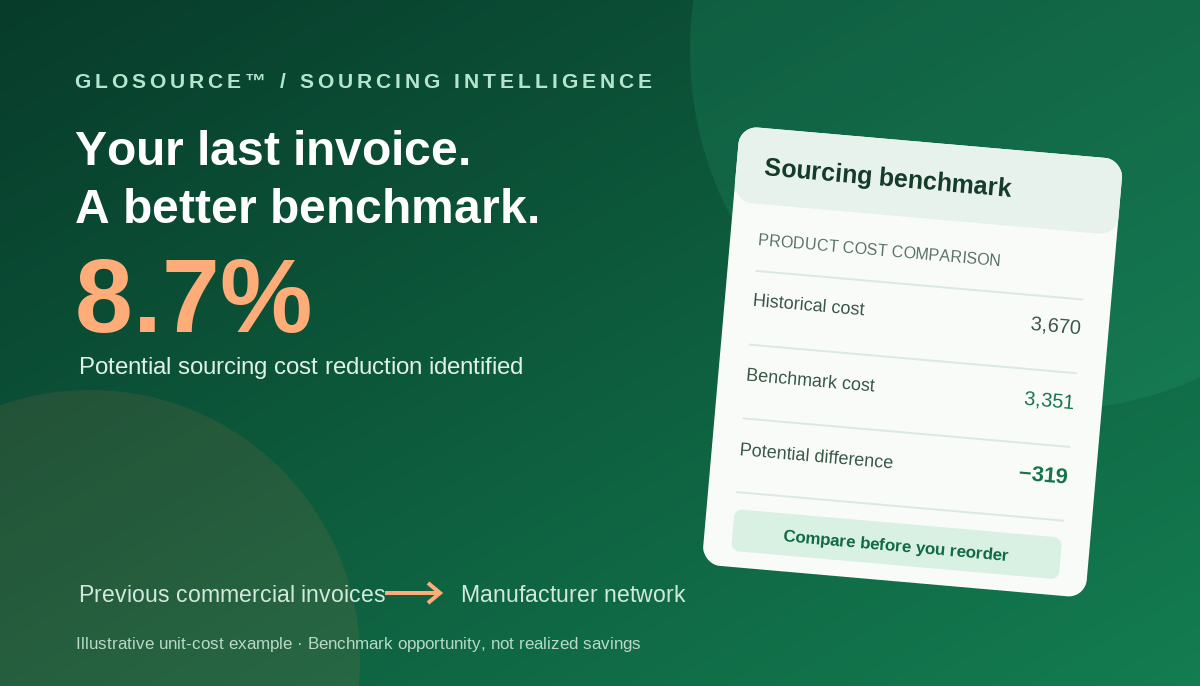
Potential sourcing cost reduction identified through Gloway's invoice benchmarking; not a confirmed or realized saving.
To illustrate the scale, a product previously purchased for FCFA 3,670 per unit would have a potential reduction of about FCFA 319 per unit at 8.7%. Across 4,000 units, that would represent approximately FCFA 1.28 million in potential cost reduction. This is a single-product illustration, not a documented total for Equator Harvest's shipment.
Lower purchase costs can improve expected margins or free working capital, but they do not automatically establish higher realized profit. Freight, duties, handling, quality, sell-through and other costs still matter.
Why it matters
The business case for a container begins before loading. Comparing historical invoices with manufacturer benchmarks helps importers question inherited sourcing costs and make better purchasing decisions, while GloSource connects those decisions to landed cost, product mix and expected commercial return.
Evidence and methodology
The 8.7% figure is Gloway's reported benchmarking finding from historical invoices and manufacturer pricing information. It should be treated as a potential opportunity pending comparable, current supplier quotations and confirmation of the exact fee and price basis. The case does not claim completed purchases, achieved savings or independently verified profit improvements.
Evidence to validate before reporting achieved savings
- Historical invoices with item quantities, purchase costs and exporter service fees
- Comparable dated manufacturer quotations and product specifications
- Quantity-weighted calculation of savings across the proposed product mix
- Final purchase orders, payment records and actual landed costs
- Client approval for publication of its name and any commercially sensitive information
The next sourcing cycle
Confirm manufacturer quotations and product equivalence, then use updated costs in Equator Harvest's next container business case. Compare the final purchase and landed costs with the benchmark before describing any reduction as achieved.
Know the business case. Then load the container.
Already importing African foods into the United States? Share your previous commercial invoices with Gloway for a confidential sourcing-cost assessment against our manufacturer network. Identify potential cost improvements before your next order.
Request an invoice benchmarking assessment